The kennel was in the back corner of the building, past the dogs that barked and jumped and pressed their faces against the wire hoping to be noticed. Past the ones who had learned to sit nicely when visitors walked by. Past all the dogs that still believed they were going home. In the last kennel on the left, a brindle pit bull mix was lying with his face against the wall, and he had been lying like that, in more or less the same position, for forty-one days.
The Dog in Kennel 14
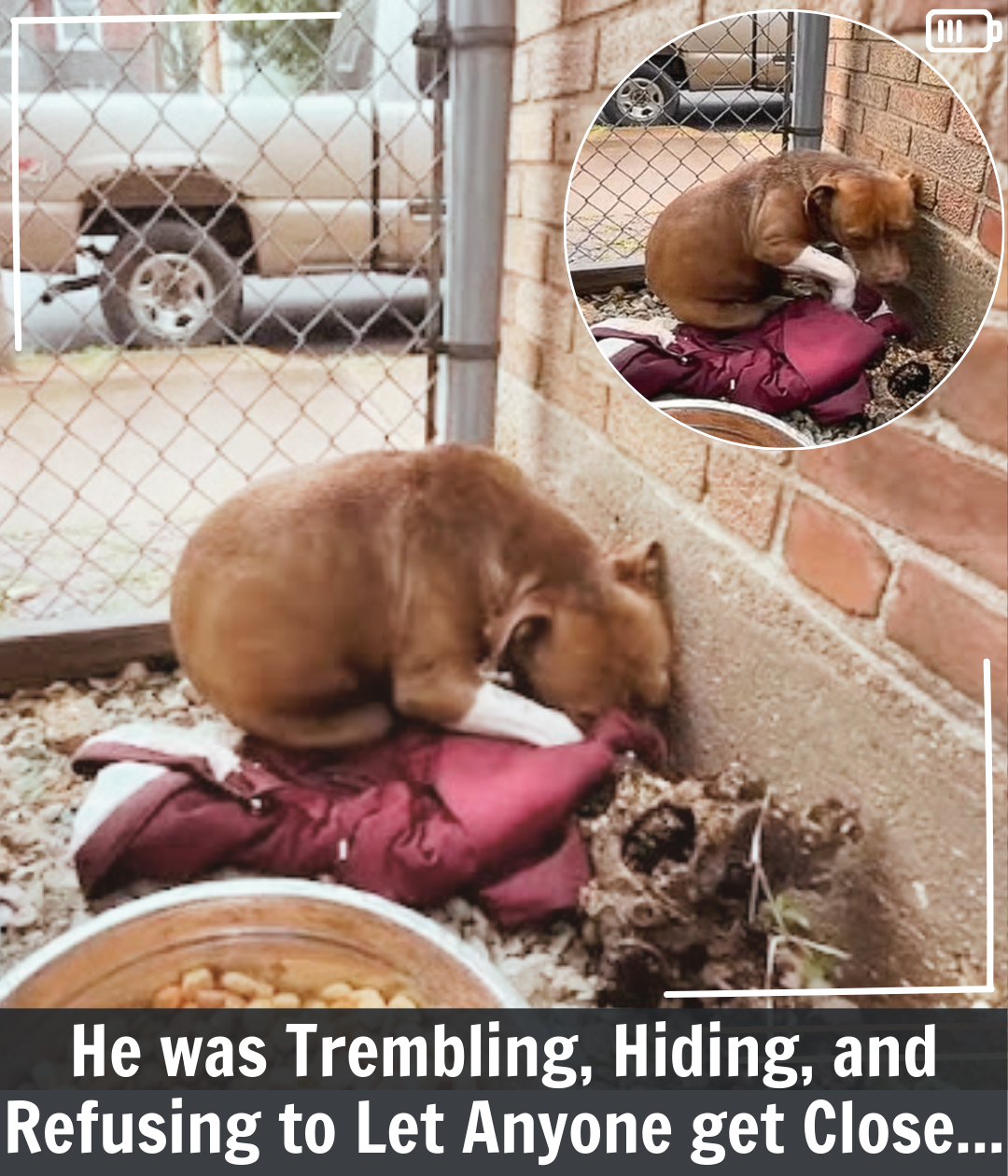
The staff at Crossroads Animal Rescue in Kansas City, Missouri, called him Ghost. Not because he was quiet — though he was — but because he had a way of making himself disappear. He would press himself so flat against the back wall of his kennel that volunteers walking past sometimes didn't realize there was a dog in there at all. He was maybe fifty pounds, brindle coat, one ear that stood up and one that folded over. His eyes were brown and they were always open and they were always watching the door.
He had come in on a cruelty case in early March. Animal control had pulled him from a property on the east side of the city where he had been chained to a cinder block in a yard with no shelter and no water bowl. The chain was three feet long. The radius of dirt he had worn into the ground around the block was a perfect circle, hard-packed and bare. He had been on that chain long enough to kill every blade of grass within reach and wear a groove in the earth. The animal control officer who brought him in estimated he had been there for at least a year.
When they removed the chain, the skin underneath was raw. The fur had been rubbed away in a band around his neck, and the tissue beneath was thickened and scarred in a way that told Dr. Amanda Reyes, the shelter veterinarian, that this was not new damage. This was old. This was the kind of scar that forms when an injury happens and heals and happens again and heals again, over and over, for months.
Ghost was not aggressive. He did not growl. He did not snap. He did not bare his teeth. What he did was worse, in a way that was harder to address. He shut down completely. When a person entered his kennel, he would press himself into the farthest corner, face against the concrete, and tremble. Not a small tremble — a full-body shaking that made his tags rattle against the floor. If someone reached toward him, he would flinch so hard his whole body would jerk sideways. He would not eat if a person was watching. He would not make eye contact. He would not take a treat from a hand.
The shelter behaviorist, a man named David Ochoa who had been working with fearful dogs for eleven years, assessed Ghost on day three and wrote in his notes: "Profound fear response. Consistent with prolonged isolation and possible physical abuse. Dog is not aggressive — dog is terrified. Prognosis for rehabilitation: possible, but will require significant time and patience. This is not a dog who has been hurt once. This is a dog who has learned, over a long period, that people are dangerous."
Forty-One Days
They tried everything the protocols recommended. Treats left inside the kennel. Quiet sitting outside the door. Classical music played on a small speaker. A worn T-shirt from a volunteer placed in the kennel so he could get used to human scent without the human attached to it. Slow approaches with averted eye contact. Soft, monotone talking.
Some of it helped, in small ways. By week two, he would eat while a person sat outside his kennel, as long as they were at least six feet away and not looking at him. By week three, he would glance at the volunteers briefly before looking away. By week four, the trembling had decreased from constant to intermittent.
But nobody could touch him. Every time a hand extended in his direction — slowly, carefully, palm down, the way you are taught to approach a fearful dog — he would flatten himself against the wall and shake. The progress was real but it was glacial, and the shelter was running out of space. They had forty-two kennels and a waiting list of sixty dogs. Ghost had been in kennel 14 for forty-one days, and there was quiet discussion among the staff about what happens when a dog cannot be socialized enough to be adopted.
Nobody said the word out loud. Nobody had to.
The Paper Bag
Rachel Guerrero was not a regular volunteer. She was a thirty-four-year-old veterinary technician who worked at an emergency animal clinic in Overland Park, twenty minutes south of the shelter. She had heard about Ghost from a colleague who fostered for Crossroads, and she had come in on her day off to meet him.
David Ochoa walked her to kennel 14 and explained the situation. He told her what they had tried. He told her about the flinching. He told her, honestly, that they were running out of time.
Rachel looked through the wire at Ghost. He was in his usual position — pressed into the back corner, face turned toward the wall, one brown eye visible and watching her sideways. She could see the scar around his neck where the chain had been.
She asked David if she could sit outside the kennel for a while. He said yes. She went to her car and came back with a paper bag from a fast-food place on the next block. She sat down on the concrete floor, with her back against the wall opposite his kennel door, and she opened the bag.
Inside the bag was a cheeseburger.
She did not look at Ghost. She did not talk to him. She did not reach through the wire or make kissing noises or call his name. She took the cheeseburger out of the bag and started eating it, slowly, like she had nowhere to be and nothing to do except sit on a cold floor in a noisy shelter and eat lunch.
David Ochoa told me later that he watched on the security camera because he was curious. He said that for the first fifteen minutes, nothing happened. Rachel ate. Ghost faced the wall. The other dogs in the building barked and whined and paced. The two of them sat in their separate silences.
At around the sixteen-minute mark, Ghost turned his head. Not all the way — just enough so that both eyes were facing the kennel door instead of one. His nose twitched. The smell of the cheeseburger had reached him.
Rachel did not react. She tore off a small piece of the burger and set it on the floor, about two inches from the kennel wire, and went back to eating.
Ghost watched the piece of cheeseburger for four minutes without moving. Then, very slowly, he uncurled his body from the wall. He did not stand up. He crawled — belly flat against the floor, legs splayed out, moving an inch at a time — toward the front of the kennel. It took him almost two full minutes to cross the six feet from the back wall to the door.
He stopped about eight inches from the wire. His nose was working. His body was trembling. But he was facing forward, and he was closer to a person than he had been in forty-one days.
Rachel still did not look at him. She tore off another piece of burger and placed it closer to the wire — almost touching it. Then she went back to eating.
Ghost stretched his neck forward. His nose touched the wire. He pulled back. He stretched forward again. His tongue came out and pulled the piece of cheeseburger through the gap in the wire and into his mouth. He chewed it once, swallowed, and stayed where he was.
He did not retreat to the wall.
Rachel placed another piece. He took it faster this time. Then another. He took that one without hesitating. She placed the fourth piece on her open palm, resting flat on the ground, her fingers poking through the wire just slightly.
Ghost looked at her hand for a long time. David told me that on the camera, he could see the dog's whole body trembling. Every instinct he had built over a year on that chain was telling him that a human hand reaching toward him meant pain. Every piece of cheeseburger he had just eaten was telling him something else.
He ate the piece off her palm. His tongue touched her fingers. He did not flinch. She did not move.
David Ochoa, who has been working with fearful dogs for eleven years and who does not cry easily, told me he put his head down on his desk at that point and took a breath.
What Happened After
Rachel came back the next day. Same routine — paper bag, cold floor, no eye contact, no pressure. Ghost came to the front of the kennel in seven minutes instead of sixteen. On day three, he was waiting at the front of the kennel when she arrived. On day four, he pressed his nose through the wire and held it against her hand for three full seconds before pulling away.
On day six, Rachel opened the kennel door. She sat inside, in the corner opposite Ghost, with the cheeseburger in her lap. Ghost approached her. He sniffed her knee. He sniffed her hand. He stood next to her for almost a minute, his body tense but not trembling, and then he did something that no one at the shelter had seen him do in fifty days.
He lay down next to her. Not against the wall. Next to her. His body was touching her leg. He let out a long, slow breath — the kind of breath a dog takes when it finally stops bracing for something bad to happen — and he closed his eyes.
Rachel put her hand on his side. He did not flinch. She could feel his ribs through his coat and the ridge of the scar around his neck and the slow, steady beat of his heart.
She adopted him the following week. She told me she never seriously considered not adopting him. She said: "The moment he lay down next to me, I knew he was mine. He had spent a year on a chain and forty-one days facing a wall and he still chose to trust someone. A dog who can do that after everything he went through — that is a dog I want in my life for the rest of his."
Ghost Now
His name is still Ghost, because Rachel said the name fits him and he had already lost enough without losing that too. He lives in her apartment in Overland Park. He sleeps on the bed, always pressed against her side, the way he used to press against the wall — except now the thing he is pressing against is warm and alive and not going anywhere.
He still flinches sometimes. Loud noises. Sudden movements. Men in heavy boots. Rachel does not push him through it. She waits. She has learned that with Ghost, waiting is the only language he fully trusts.
She still brings him a cheeseburger every Friday. She buys it from the same place — the fast-food restaurant on the block next to the shelter. She unwraps it and puts it on a plate and sets it on the kitchen floor, and Ghost eats it slowly, carefully, the way he ate that first piece through the wire. Like he wants to make sure he remembers every part of it.
I asked Rachel what she thinks about when she watches him eat that Friday cheeseburger.
She was quiet for a moment. Then she said: "I think about how close it was. Six more days and they were going to make a decision about him. Six days. And all he needed — all he ever needed — was for someone to sit on the floor and not ask anything from him. That was it. Just someone willing to be near him without wanting something. He had never had that before. Not once in his life."
She looked at Ghost, who was asleep on the couch with one paw hanging off the edge.
"A three-dollar cheeseburger," she said. "That is what his whole life came down to. A three-dollar cheeseburger and someone willing to sit on a cold floor."